Manger Local : Au-delà du Wagasi
Écrit par
Team Fidjrossè
Benin is full of culinary treasures. Do not leave without tasting a real Amiwo with bicycle chicken (firm local chicken).
Eating Local in Fidjrossè: Beyond Wagasi
Benin is full of culinary treasures, and the Fidjrossè neighborhood, nestled between the lagoon and the Atlantic Ocean in Cotonou, is one of its beating hearts. While the famous Wagasi (Fulani cheese) often captures all the visitors' attention, stopping at this product alone would be a mistake. To understand the soul of Fidjrossè, you must venture into its sandy streets, listen to the crackle of the embers, and breathe in the spicy scents wafting from open-air kitchens. Here, gastronomy is not enjoyed in luxury, but in the authenticity of flavors and respect for traditions.
The Unmissable Amiwo and "Bicycle Chicken"
Do not leave Fidjrossè without trying a real Amiwo. Often called "red paste," this dish is an institution. Unlike the classic white corn-based dough, Amiwo is prepared with corn flour cooked in a broth of tomato, onions, and spices, giving it its characteristic color and deep, slightly tangy taste.
The indispensable companion to Amiwo is bicycle chicken. Far from industrial standards, this local chicken owes its name to its life in the open air: it is firm, muscular, and extremely flavorful. In Fidjrossè, its preparation is an art: the chicken is first boiled with local herbs, then fried or grilled to achieve a crackling skin and meat with character. It is a dish eaten with your fingers to appreciate every nuance.
The "Chez Maman" Maquis Experience
To find these gems, forget the classic travel guides. In Fidjrossè, the "Chez Maman" maquis (local eateries) often offer the most authentic dishes. The term "Chez Maman" (At Mom’s) is an informal guarantee of quality here: it refers to establishments run by women who cook just like at home, with patience and skills passed down from generation to generation.
Sitting in one of these maquis means agreeing to take your time. The setting is rustic, the benches are sometimes made of raw wood, but the welcome is always warm. It is here that you will understand that Beninese cuisine is, above all, a cuisine of sharing. People come for the Amiwo, certainly, but also for the unique atmosphere where discussions flow freely under the ceiling fans.
The Coastline and Its Braised Fish
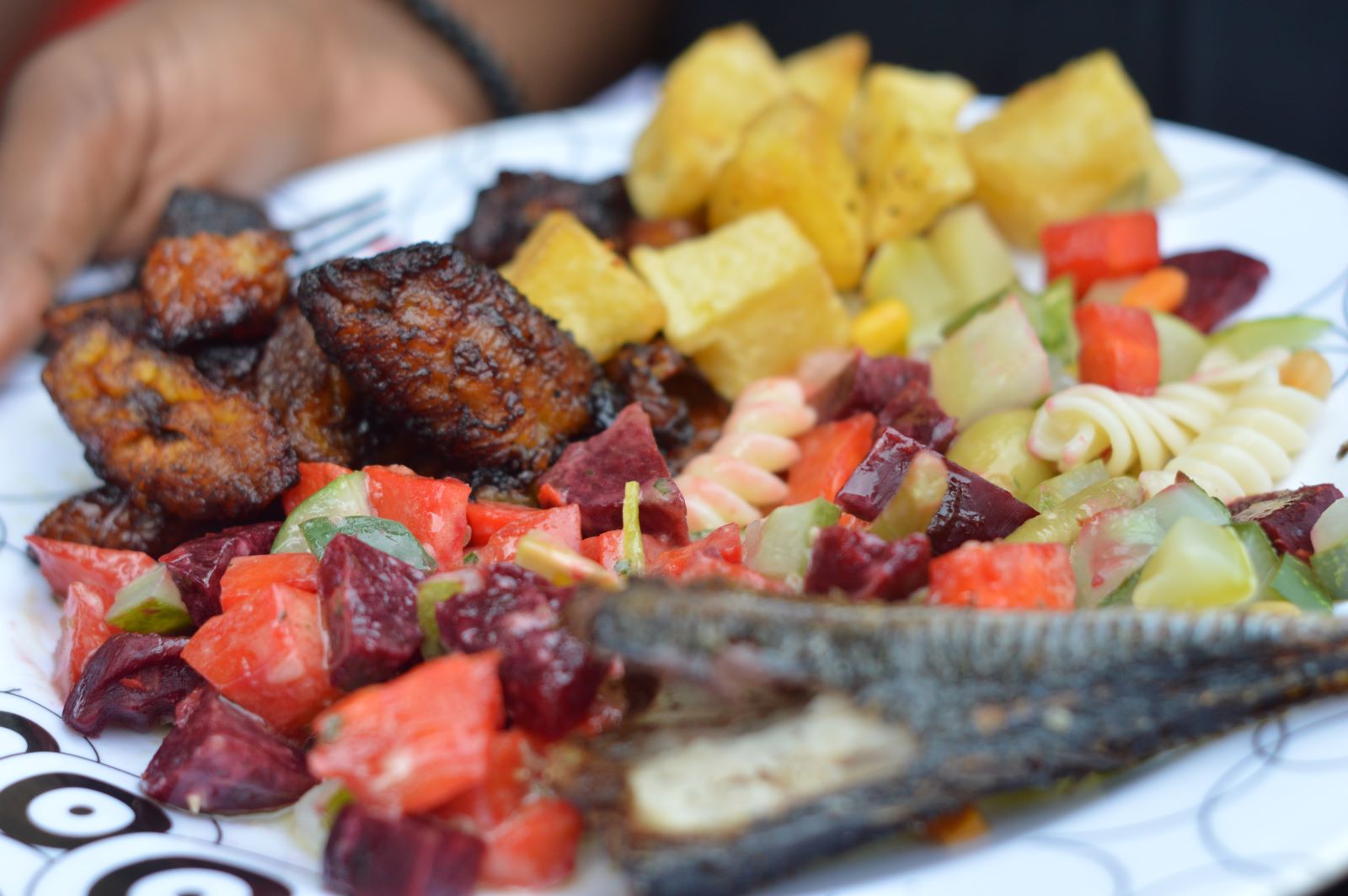
As evening falls, activity in Fidjrossè shifts toward the seaside, along the Route des Pêches (Fishermen's Road). Braised fish accompanied by crushed green chili is a classic for seaside evenings. Every day, fishermen bring back sea bream, grouper, or sea bass that end up directly on the grill.
The secret lies in the marinade—a mix of ginger, garlic, and secret spices—and especially in the side dishes. The fish is generally served with fresh green chili, crushed in a mortar with a bit of onion and lemon. To accompany it all, you have the choice between Ablo (small steamed rice and corn cakes, slightly sweet) or Aloko (fried plantains). The contrast between the heat of the chili, the sweetness of the Ablo, and the smokiness of the charcoal-grilled fish alone defines the Fidjrossè night experience.
The Nobility of Pounded Yam and Manatin
If you are looking for a heartier dish, dare to try Manatin (a green vegetable sauce, often based on crincrin leaves or local spinach) accompanied by pounded yam. Pounded yam, or "Iyan," is a physical preparation: boiled yam is struck in a large wooden mortar until it reaches an elastic, smooth, and melting texture.
It is a dish of celebration and respect. The Manatin sauce that accompanies it is rich, often enhanced with pieces of smoked meat, dried fish, or shrimp, providing a typical regional umami depth. It is a complete sensory experience, where the sweetness of the yam tempers the strength of the sauce.
Street Treasures: Atassi and Akassa
For those in a hurry or for a quick lunch, Fidjrossè also offers remarkable street food options. Atassi is the perfect blend of rice and red beans, often served with a spicy tomato sauce (known as "dja") and a boiled egg or fried fish. It is the worker's breakfast or lunch—complete and revitalizing.
Finally, don’t forget to taste Akassa, a fermented corn dough wrapped in leaves, which pairs wonderfully with fish sauces. It is a staple food, discreet but essential, testifying to the Beninese mastery of cereal fermentation.
Eating in Fidjrossè means agreeing to go off the beaten path. It is a local cuisine, raw and generous, that does not seek to impress with presentation, but through the accuracy of its flavors. Whether under a corrugated iron roof in a neighborhood maquis or facing the ocean, every bite tells you a part of Benin's history.
Team Fidjrossè
Contributeur Fidjrossè Connect